It’s well known that Premier League clubs make a lot of money. But I was curious about something different: which clubs are actually well run financially?
To answer that, I built a small Python model to rank football clubs based on their financial health. Instead of league position or trophies, this looks purely at how sustainable each club’s finances are.
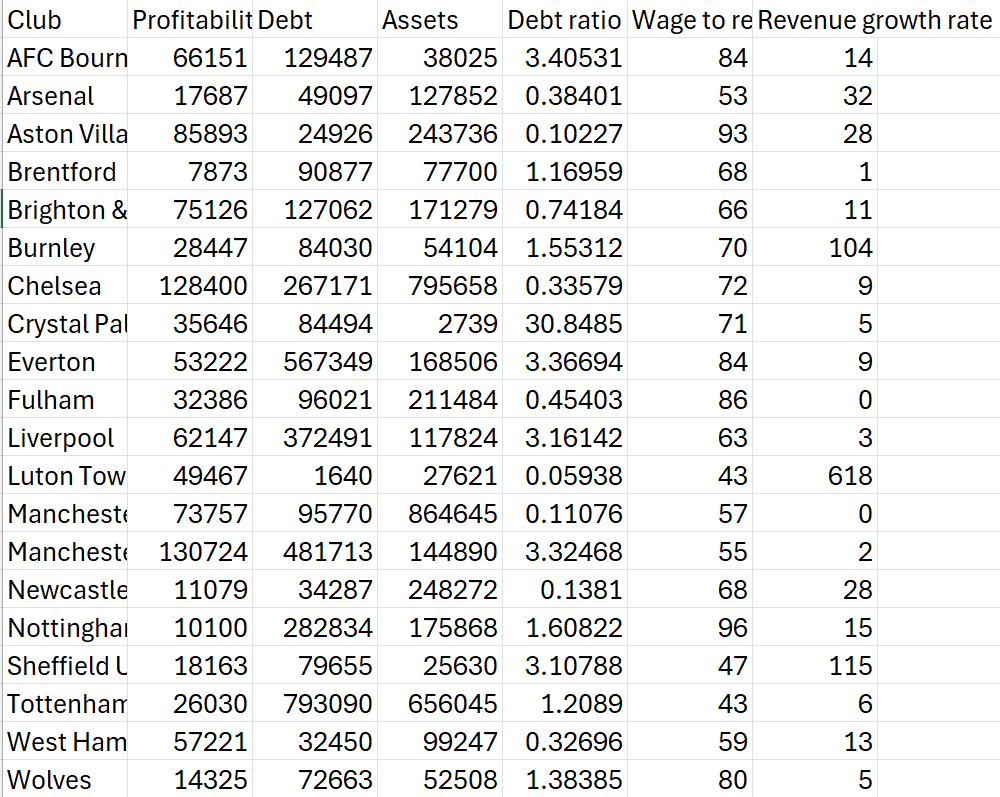
I used data from the Deloitte Football Money League 2025, which publishes detailed financial information on the biggest clubs in Europe. I pulled the figures into an Excel sheet and used that as the basis for the model. Deloitte has been producing this report since the late 1990s, and club revenues today are more than five times higher than they were back then.
From the data, I picked a few indicators that I felt best reflected long-term stability. These included how much debt a club has relative to its assets, whether it is profitable, how much it spends on wages, and whether its revenue is growing. Wages in particular stood out, as some clubs spend well over half of their revenue just on player salaries.
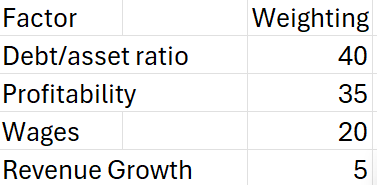
Each of these factors was given a weighting based on how important it is to financial health. The idea was to reward clubs that grow sustainably, rather than those that simply spend the most.
I then used Python to clean and process the data. The figures were normalised so that clubs of different sizes could be compared fairly, and the model combined everything into a single score.
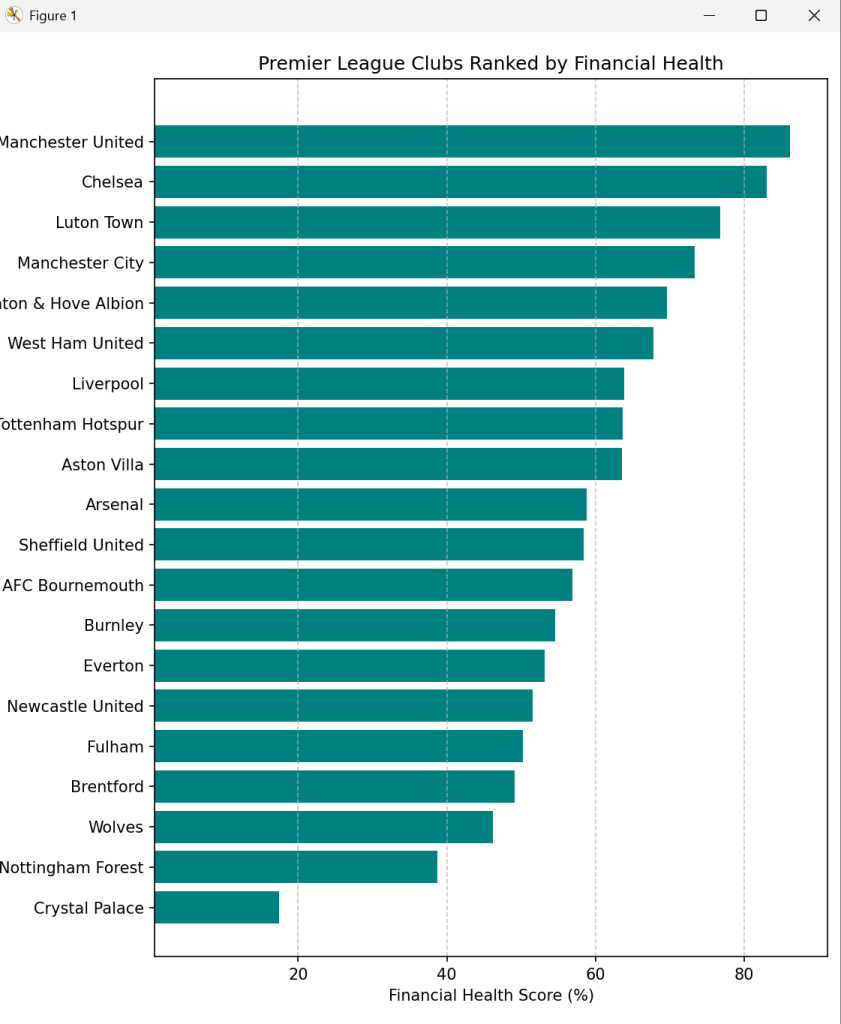
Here’s a table I created showing the ranking using Python code.
Drawbacks to data
This data has since aged, as the report is based on financial data from last year. Since last year, Manchester United’s debt has skyrocketed from £481 million to £1.3 billion. The new INEOS ownership has implemented cost-cutting measures, including sacking the club historian and stripping matchday staff of free lunch!
Conclusion
By combining a few simple financial signals into one ranking, it highlights clubs that are running sustainably and those relying on constant success just to stay afloat. It’s not a verdict and it’s not a forecast. It’s a way of cutting through turnover headlines and looking at financial health in context.
 Predicting Premier League games
Leave a comment